Signs Your Brake Pads Need Replacing
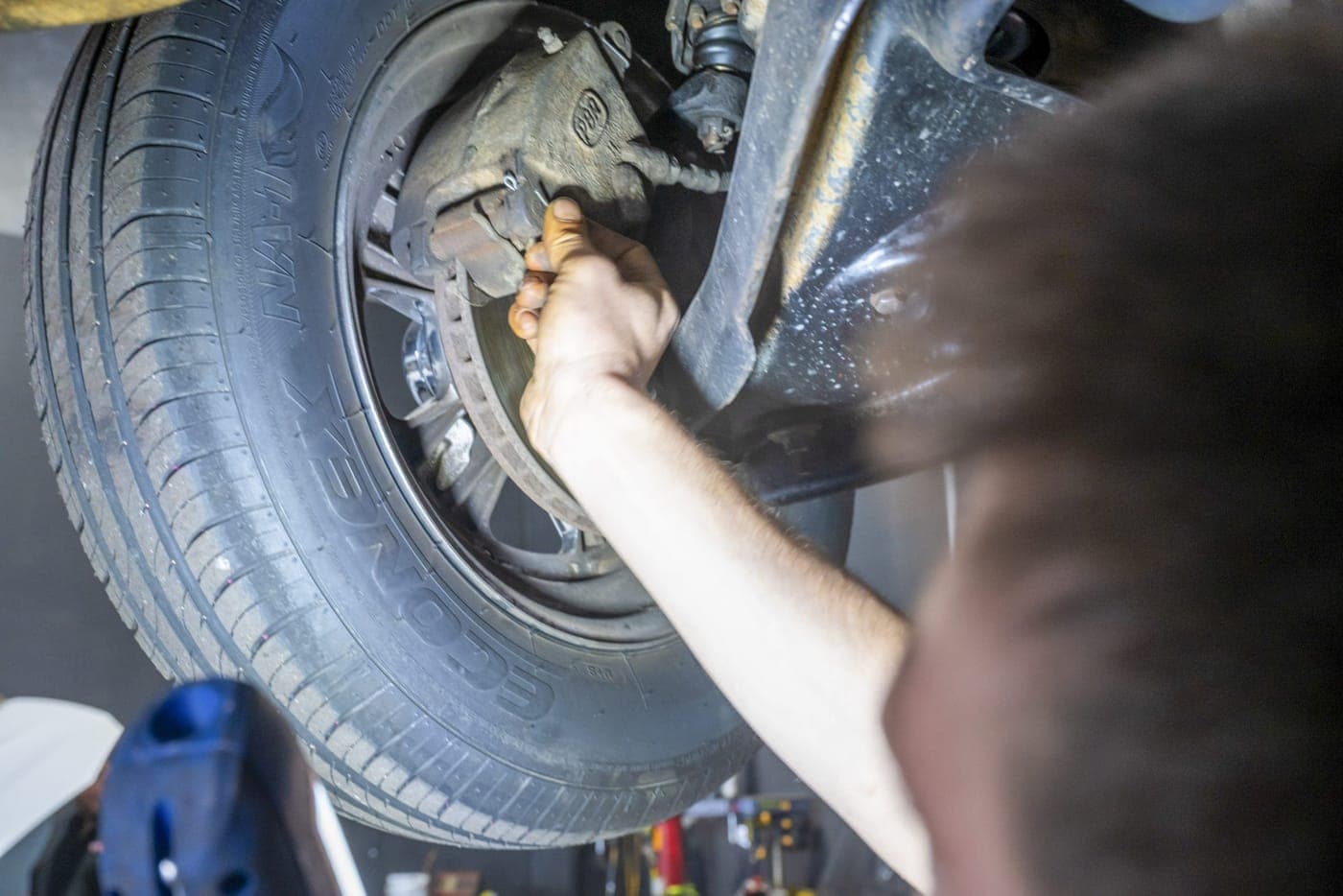
- Signs Your Brake Pads Need Replacing
- The common signs that brake pads need replacing are a high-pitched squeal when braking, a metallic grinding noise, longer stopping distances, a brake warning light, or a shudder through the pedal, though the only reliable check is measuring pad and disc thickness against the manufacturer's minimum.
Brake pads are designed to wear out. That is the whole point of them. They are the sacrificial part, chosen to wear so the disc does not.
The trouble is that they wear gradually, and your brain adjusts to a gradually worsening brake pedal without ever noticing. So it helps to know what the symptoms sound and feel like, and which of them mean stop driving.
A high-pitched squeal when you brake
Usually this is the wear indicator doing exactly its job. Many pads have a small metal tab that contacts the disc once the friction material reaches its limit, producing a deliberate squeal to tell you the pads are due.
It is not an emergency, but it is a booking. Squealing that appears only in the wet, or only on the first stop of the morning, is often just surface rust or dust and clears after a stop or two.
A metallic grinding or scraping
This is different, and it is urgent. Grinding usually means the friction material is gone and the pad's steel backing plate is contacting the disc directly.
Two things follow. Your braking performance is significantly reduced, and every stop is cutting grooves into a disc that was fine a fortnight ago. A job that was a set of pads becomes pads and discs, and sometimes a caliper. Stop driving on it.
The pedal feels wrong
How the pedal feels tells you about the hydraulic system rather than the pads, and both faults here are serious.
- Spongy or soft
- Air or moisture in the brake fluid. Fluid absorbs water over time, which lowers its boiling point. So the pedal can feel fine cold and go soft after repeated heavy braking.
- Slowly sinking under steady pressure
- A leak, or a failing master cylinder. Sitting at lights with your foot on the brake and feeling the pedal creep down is a fault that needs attention immediately.
- Hard, with poor braking
- Often a brake booster or vacuum fault. The brakes still work but require far more effort, which lengthens stops.
Pulling to one side under braking
Typically a sticking caliper or a flexible hose that has collapsed internally, so one wheel gets pressure the others do not. It lengthens stopping distances, makes the car unstable under heavy braking, and wears one side out quickly.
A hose can fail internally with nothing at all visible from outside, which is why this gets tested rather than eyeballed.
Shudder or pulsing through the pedal
Almost always the discs rather than the pads, uneven thickness, or a disc that has warped through heat. You feel it as a rhythmic pulse that gets stronger the harder you brake.
The good news is that it is often fixable without new discs. If there is enough material above the minimum thickness, machining the disc restores a flat, true surface for considerably less than replacement. If it is already at minimum, or cracked or heat-damaged, it has to be replaced, taking more material off would leave too little to disperse heat safely.
Why measurement beats every symptom on this list
Every sign above is a prompt to have the brakes looked at, not a diagnosis. Pads wear at different rates front to rear and sometimes side to side, discs have a specified minimum thickness stamped on them, and the answer is a number.
That is why brakes are measured at every service here rather than assessed by feel on a short drive. Replacing pads on time is routine work. Running them into the discs is what turns it into a bill.
Brakes are also inspected as part of a Victorian roadworthy, so if you are coming up to selling the car, worn pads are one of the more common reasons a vehicle fails.
Brake Repairs in Craigieburn
Freddy's Auto Care repairs and replaces brake pads, discs, calipers, hoses and brake fluid, and machines brake discs on site, at 14 Potter Street, Craigieburn.
14 Potter Street, Craigieburn VIC 3064