Why Is My Steering Wheel Shaking?
- Why Is My Steering Wheel Shaking?
- When a steering wheel shakes depends on the cause: a shake that appears around highway speed is usually wheel balance or a buckled wheel, a shake felt only while braking usually points to the brake discs, and a shake present at all speeds is often a damaged tyre or a worn steering or suspension component.
This is one of the most usefully diagnosable complaints a car can have, because the answer is almost entirely determined by one question: when does it happen?
Get that right and you can narrow five possible causes down to one or two before the car even goes on a hoist. Here is how to do it.
It appears around 80-100 km/h and gets worse with speed
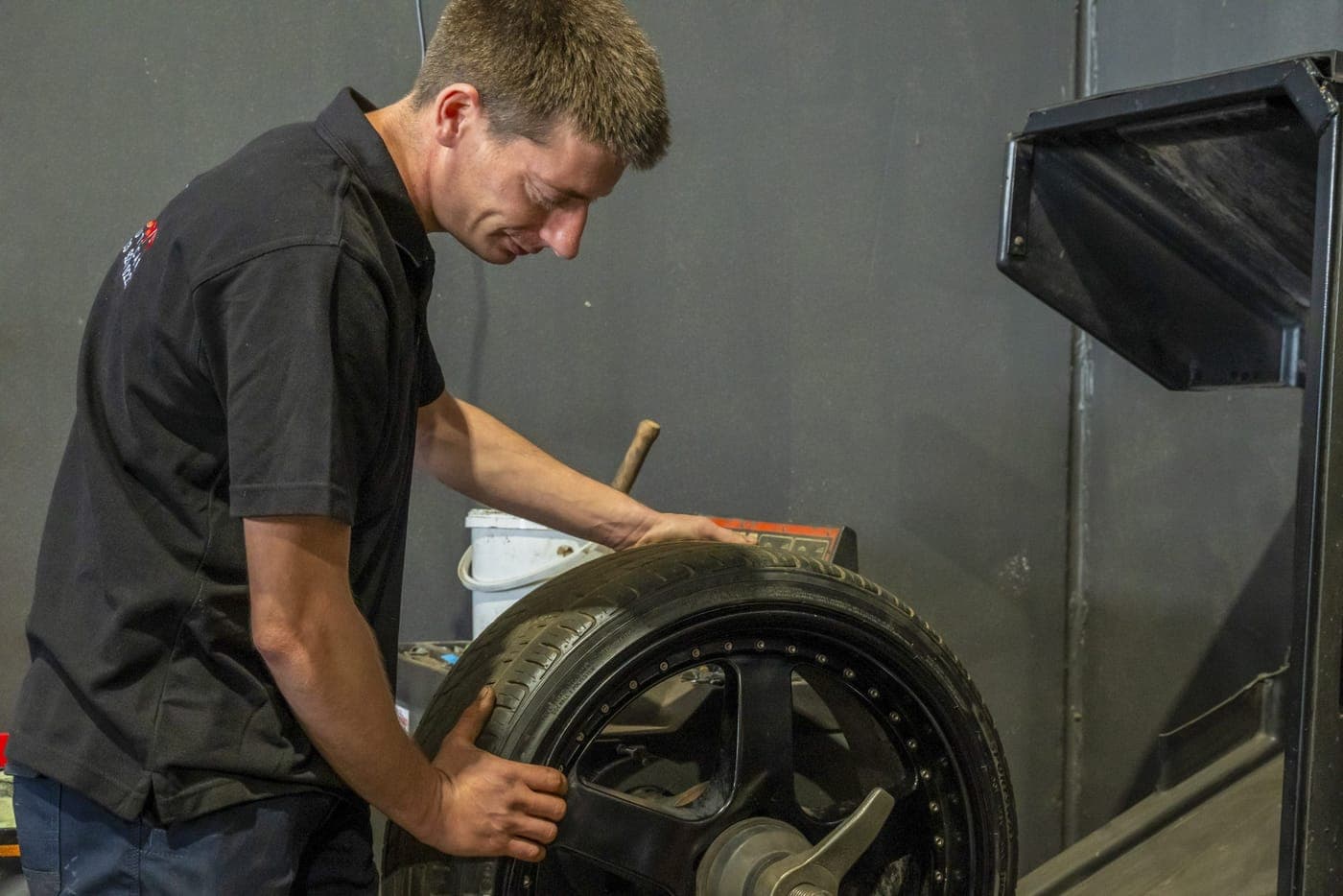
This is the classic wheel balance vibration, and it is the most common cause by a wide margin. A wheel and tyre assembly that is even slightly out of balance produces a vibration whose frequency rises with speed, which is why it appears in a particular band and often smooths out again above it.
Related causes in the same category are a buckled wheel, usually a pothole or kerb strike, or a tyre with a shifted internal belt, which can be perfectly balanced and still vibrate because it is no longer round.
Balancing is cheap. If your vibration matches this description, it is the first thing to check and often the whole answer.
It only happens when you brake
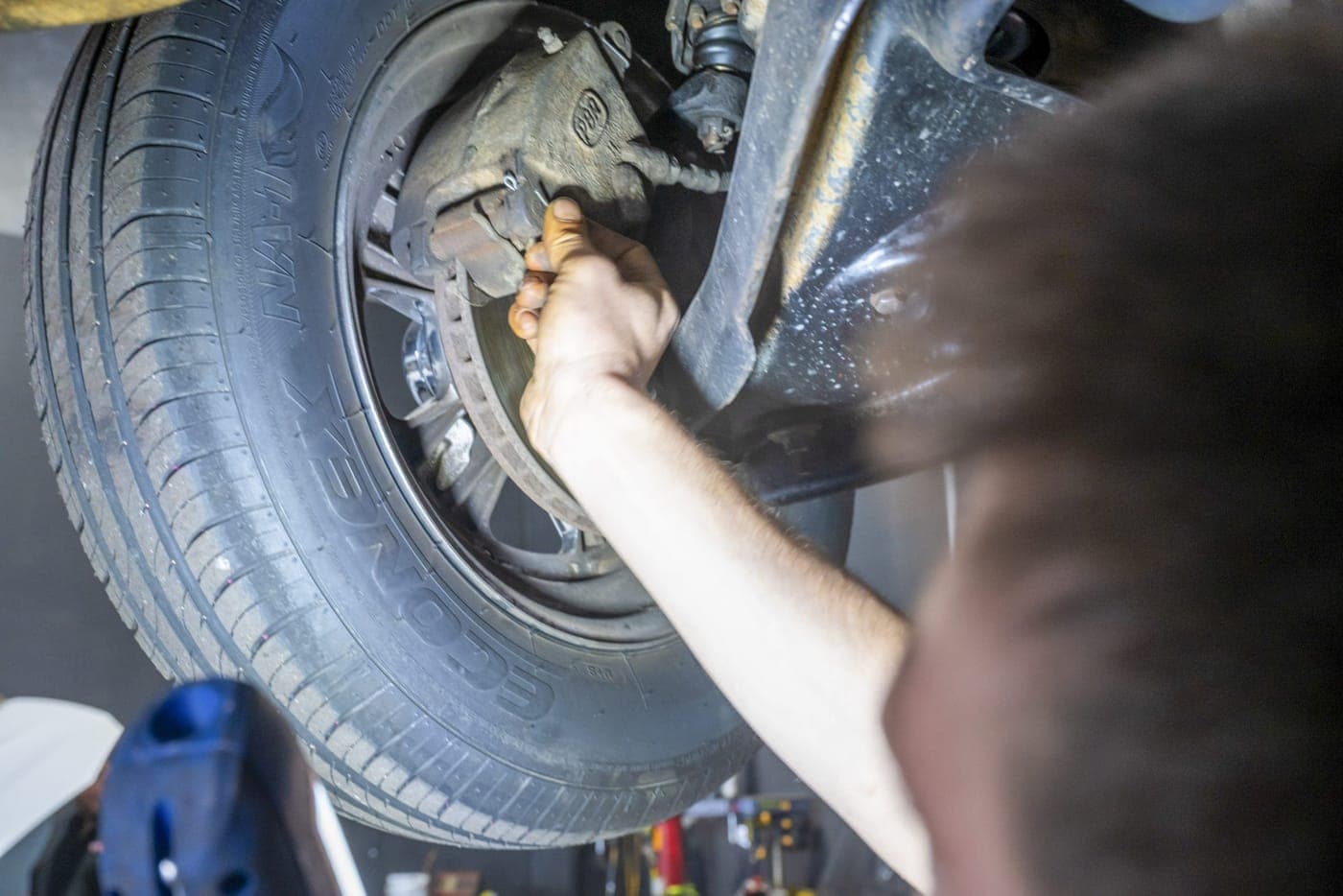
Then it is the brakes, and specifically the discs. Uneven disc thickness or a warped disc makes the pads grip and release fractionally as the disc turns, and you feel that as a pulse through the pedal and often through the wheel.
If you feel it through the steering wheel, it is usually the front discs. Through the seat or the body of the car, more often the rears.
As with brake shudder generally, machining the discs will cure it if there is enough material left; otherwise they need replacing.
It happens at all speeds, including low
A vibration present from 30 km/h upwards is a different set of causes, and more of them are mechanical wear.
- Tyre damage
- A bulge, a flat spot, or separation inside the tyre. Worth a close look at all four before anything else, this is visible.
- Worn steering or suspension joints
- Tie rod ends, ball joints and control arm bushes with play allow the wheel to move in ways it should not. Usually accompanied by clunks over bumps.
- A worn CV joint or driveshaft
- Often felt under acceleration specifically, and frequently paired with a clicking noise on full lock.
- A loose wheel
- Rare but serious. If the shake appeared immediately after a tyre change or a wheel was removed, stop and check the wheel nuts.
The car also pulls, or the wheel sits off-centre
If the shake comes with the car wandering, pulling to one side, or the steering wheel sitting crooked when you are driving straight, wheel alignment is involved.
Alignment does not usually cause a vibration by itself, but it causes the uneven tyre wear that does. And it means whatever else is wrong will keep coming back until the geometry is corrected. Any time steering or suspension parts are replaced, alignment should follow.
Why it is worth chasing rather than living with
A vibration is rarely dangerous in itself, but it is almost always destroying something. An out-of-balance wheel hammers the wheel bearings and suspension bushes. A worn joint accelerates the wear on everything attached to it. Uneven tyre wear from misalignment ruins tyres worth many times what the alignment costs.
Steering and suspension components are also assessed in a Victorian roadworthy inspection, so wear here becomes a compliance problem as well as a comfort one.
Steering Repairs in Craigieburn
Freddy's Auto Care diagnoses and repairs vehicle steering faults including power steering leaks and pumps, steering racks, tie rod ends and idler arms at 14 Potter Street, Craigieburn.
14 Potter Street, Craigieburn VIC 3064